Forestry Mulching vs. Traditional Land Clearing
Two very different methods for the same problem. Here's a straight comparison of cost, time, environmental impact, and the stuff nobody tells you until after you've already signed the contract.
Published 2026-04-21 · Dirt Dynamics LLC
If you've ever gotten two land clearing quotes that were thousands apart, the difference was probably method. Traditional land clearing and forestry mulching solve the same problem — turning overgrown or wooded property into usable land — but they get there very differently, and the right choice depends on your goals, your timeline, and what's under the canopy.
What Each Method Actually Does
Traditional land clearing uses dozers, excavators, and sometimes a grapple loader to push trees down, pile them, grub the stumps, and haul the debris off-site or burn it on site. You end up with bare, pushed dirt ready for grading.
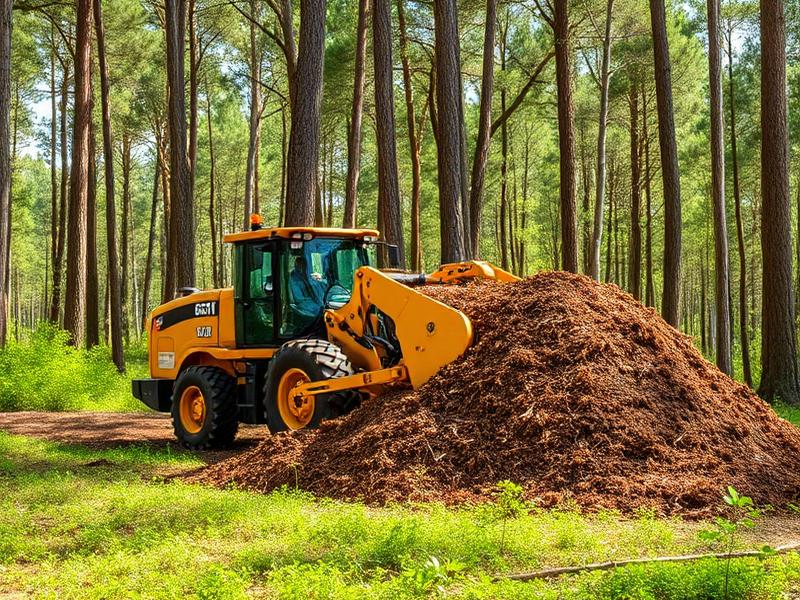
Forestry mulching uses a tracked, low-ground-pressure mulcher with a rotary head that grinds standing vegetation in place — trees, brush, stumps up to a certain size, vines, palmettos. Everything gets chipped and spread on the ground as a 2–6 inch mulch layer. No piles. No burn. No haul-off.
Side-by-Side Comparison
| Factor | Traditional Clearing | Forestry Mulching |
|---|---|---|
| Typical cost / acre | $3,500–$8,500 | $1,500–$4,500 |
| Speed | Slower — multi-step | Faster — single pass |
| Finished surface | Bare dirt, ready for grading | Mulched surface, not graded |
| Stumps | Fully removed | Ground flush or left in place |
| Burn piles / hauling | Yes — permits often required | None |
| Erosion risk | High until re-seeded | Low — mulch protects soil |
| Soil disturbance | Significant | Minimal |
| Selective clearing | Difficult | Easy — tree-by-tree |
| Best for | House pads, full-site clearing, foundations | Underbrush, trails, lot maintenance, selective |
Cost, Honestly
Forestry mulching is 40–60% cheaper per acre than traditional clearing because it eliminates the three most expensive line items: burn permitting and supervision, haul-off trucking, and stump grubbing. On a typical Florida 5-acre residential lot with moderate density, you might pay $22,000 for traditional clearing versus $12,000 for mulching.
The catch: if you need a graded, stump-free, bare-dirt finish for a slab foundation, mulching alone won't get you there. You'd still need a grading and stump-removal pass on top of the mulching. At that point the cost gap narrows.
Timeline
Traditional clearing on a 5-acre residential lot takes 5–10 working days — push, pile, grub, haul, clean. Forestry mulching on the same site takes 1–3 days. If weather or permit windows are tight, mulching wins by a lot.
Environmental Impact
The mulch layer from forestry mulching protects soil from Florida's heavy summer rains, retains moisture, and returns organic matter as it breaks down. It's the single biggest erosion control measure you can put on a fresh clearing for free. Traditional clearing leaves bare soil that can lose 10+ tons of topsoil per acre during one heavy storm if it's not stabilized.
Traditional clearing also generates burn piles, which means smoke, air-quality impact, and often a Florida Forest Service burn permit with strict weather conditions. Forestry mulching generates no piles, no burn, and no haul-off truck traffic.
Stumps and What Happens Underground
Traditional clearing removes stumps. That matters when you're building a foundation — stumps rot, settle, and create voids under slabs. Forestry mulching grinds stumps flush with the surface or 4–6 inches below, which is fine for pasture, trails, fence lines, and non-structural use, but not for anything bearing weight.
Which Should You Choose?
Pick forestry mulching when: you want lot maintenance, underbrush removal, trail clearing, selective tree removal, pasture reclamation, fire mitigation, or a low-cost clear that leaves trees you like standing.
Pick traditional clearing when: you're putting a house pad or commercial slab on the site, you need stumps fully gone, or you want bare dirt for immediate grading.
Many Florida jobs end up as a hybrid: mulch the overgrowth, then do a targeted push-and-pile in the building footprint. That's usually the cheapest total-cost path, and we quote it that way when it makes sense.
Want a specific recommendation for your property? See our forestry mulching service page and land clearing service page, or call (386) 457-8785 for a free walk-through.
Not Sure Which Method Fits Your Site?
Free on-site consultation — we'll tell you straight.